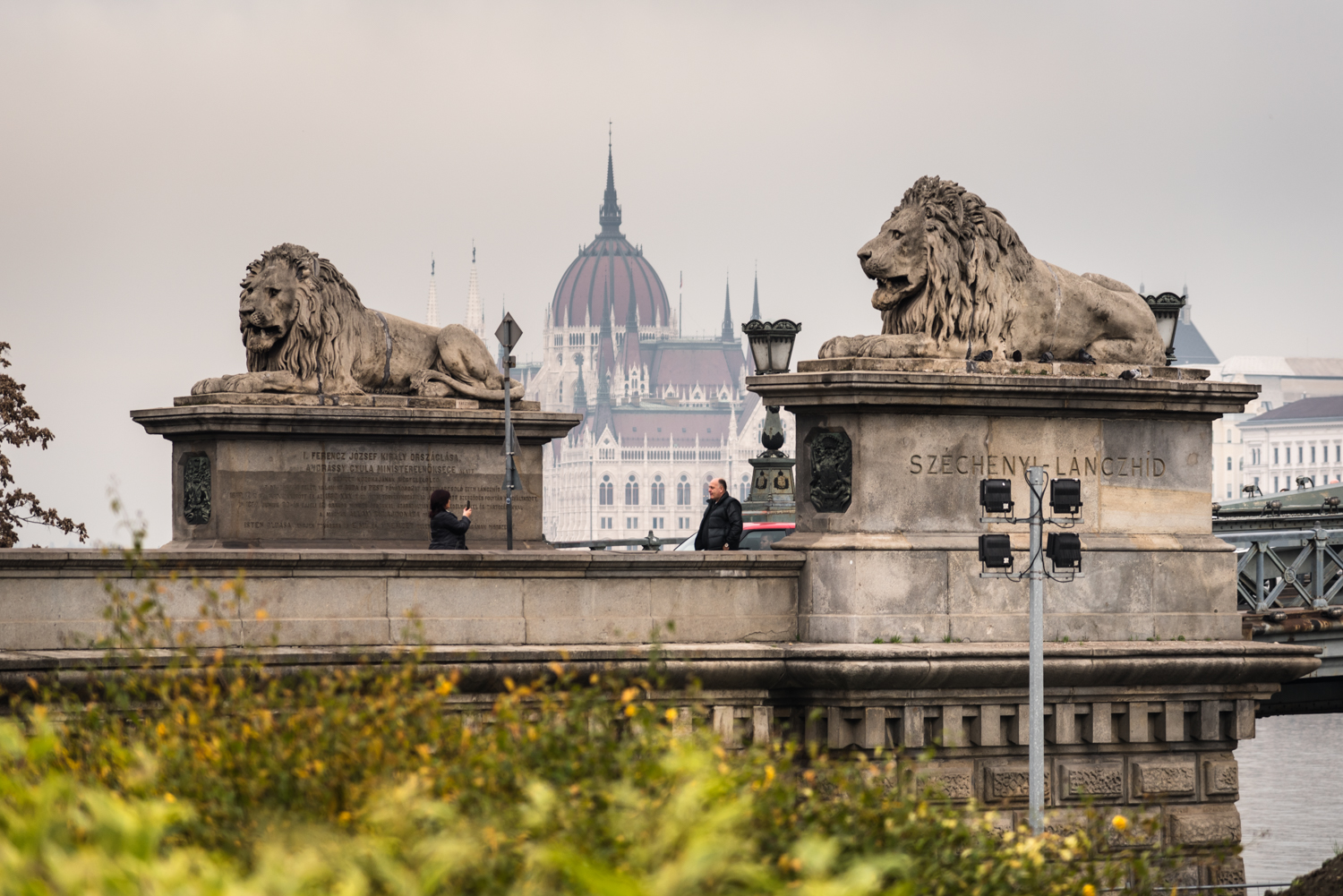


Graceful lions welcome those who cross the Danube on Budapest’s most iconic landmark, connecting Széchenyi Square and the imposing Four Seasons Hotel Gresham Palace on the Pest side with Clark Ádám Square and its historic Castle Hill Funicular on the Buda side. The stone-carved beasts are the works of Hungarian artist János Marschalkó, whose name is surrounded by a deadly legend: soon after the statues’ installation, a cobbler pointed out that the majestic lions are lacking tongues, and this story’s escalation led to the ashamed sculptor’s suicide. These rumors turned out to be false, and in fact the petrified creatures possess the contested sensory organ, although it’s hardly visible from the pedestrian side of these sculptures. Those who admire the lions from a closer angle can notice a metal-made symbol mounted on the base, representing the major supporters of the construction project – Count István Széchenyi and Baron György Sina – while the upper parts of the arches are adorned with the Hungarian Coat of Arms perched above a roaring lion’s head, making the bridge one of Budapest’s postcard superstars.
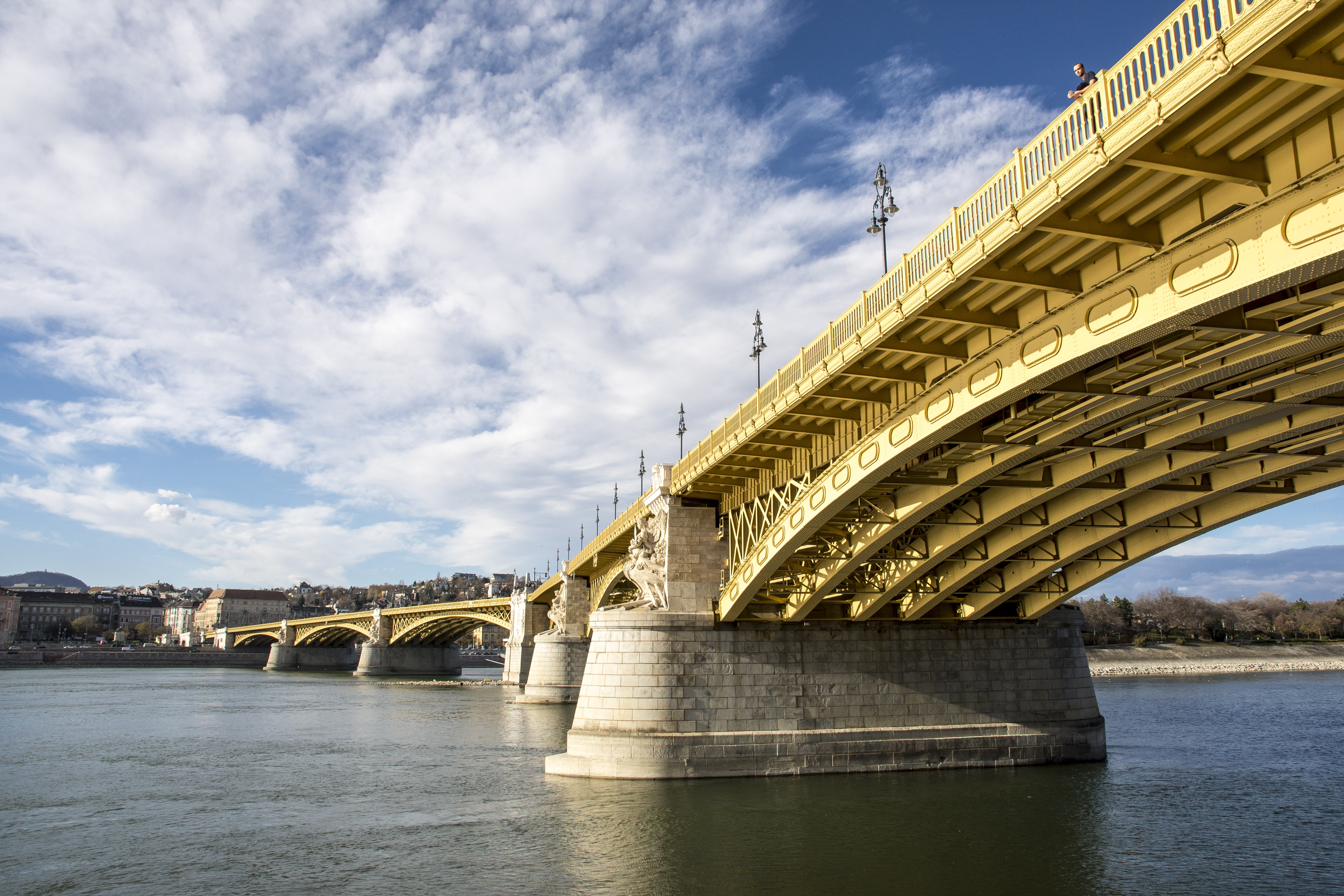
Awe-inspiring divine heroes adorn the Margaret Bridge’s massive stone pillars, featuring Greek mythological warriors as they powerfully tower above the swirling waterway. Built according to the plans of French architect Ernest Goüin in 1876, Budapest’s second-ever permanent Danube span joins Szent István Boulevard on the Pest side and Margit Boulevard on the Buda side, with a connection to the Margaret Island halfway through. Adolphe Thabard’s elaborate sculptures demonstrate Hercules, the deific protector of mankind, and Nike, the winged goddess of victory, and all these artworks add dramatic charm to this understated overpass. The majestic statues can be best viewed from the river level aboard a passing boat (Budapest’s public ferry service offers an inexpensive option for this), along with the central pillar that bears a commemorative plaque as the manifestation of the first construction works; the stone-carved Holy Crown of Hungary stands above the memorial, and is flanked by sleek obelisks featuring two elegant dragon-shaped cast-iron lamps, elevating the bridge’s artistic heights.

Megjelent első bookazine-unk, ne maradj le róla!
Már 15 éve lélegzünk összhangban a fővárossal. Jubileumi kiadványunkban mindent megtalálsz, ami magazinunk és eddigi munkánk esszenciája. Gasztronómia, kultúra, városi legendák és Budapest arcai, interjúk, történetek és a legjobb helyek – úgy, ahogyan mi látjuk a fővárost.
Rendeld meg itt vagy keresd a nagyobb könyvesboltokban!
hirdetés


