

One of the earliest examples of cultural exchange between the New World and Hungary – according to Dávid Merker, guide on the Amerikából jöttem (‘I Came from America’) tour – is a book about Native American tribes, published in Hungarian as far as back as 1694 by a printing house in Cluj.

After the Revolution of 1848-49 failed, more than half a million
Hungarians emigrated to America. In 1851, the great statesman Lajos Kossuth
visited the United States, where he was welcomed in New York as a hero.
After
meeting with President Millard Fillmore in the White House, he embarked on a
six-month nationwide tour to advance the cause of Hungarian independence. It
was essentially a fundraising campaign that ended in moderate financial and
political gain. Many, unlike Kossuth, returned home. (Bizarrely, Cheryl Kossuth, a nurse from California, came to Budapest in 2019, looking for details of her long-lost relative.)
These footnotes in history are among the many gems unveiled on the walk, run by the Hosszúlépés cultural association and organised by the National Library of Foreign Literature, where the journey begins on Molnár utca in downtown Budapest.

In the lobby, Ernest Hemingway welcomes tour groups, his speech for the Nobel Prize ceremony broadcast from the loudspeakers. Dávid Merker elaborates on the formative period of Hemingway’s career, when he and fellow traveller Robert Capa, the famous Hungarian photographer, hung out in Paris and covered the Spanish Civil War.

The walk then leads to the Danube embankment nearby, where Merker moves the conversation on to architecture. Art Deco is the subject of much debate among historians as to how it should be categorised (a movement? A trend?). In any case, it is the first architectural style to be completed in the United States and then return to Europe.
Freedom of movement
“Before World War I, there was nothing like the level of globalisation we know today. While most people did not have passports, architects came and went between countries, they wielded influence in international trade relations. Industrial development allowed for changes in architecture – reinforced concrete appeared. Thanks to this, designers were given incredible freedom, buildings of any size could be erected, huge glass surfaces and windows,” explains Merker.

After the shock of the global conflict and the Spanish Flu, an unbridled
mood of Anything Goes prevailed, and the belief in progress and industrial-scientific
development manifested itself in Art Deco as well.
In Budapest, it appeared
only in private constructions, the official canon characterised by Historicist
architecture and a re-creation of the past. But you can find Art
Deco, in the New Theatre building on Paulay Ede utca, and the residential houses on
downtown Madách tér and in Újlipótváros at Miklós Radnóti utca 21B and Pannónia
utca 19.
One particularly interesting topic on the walk is the development of Socialist-era
tourism and how important it was that Americans should come to Budapest. During
World War II, the hotels lining the banks of the Danube were destroyed, and in
the 1950s, Hungary was characterised by complete confinement. It was impossible
to travel in or out, all the money was spent on prestige investments and
industrial development.
In the 1960s, a gradual opening also extended to the economy,
and it was soon realised that real development would only come from the West. For
this to work, dollars and American tourists were needed.
Standing on the Danube Promenade, the Hotel Marriott (formerly the Duna InterContinental), built in 1969, is an excellent example of how these tourists were looked after. All the windows of the hotel overlook the Danube.
Goulash tourism
“Nowhere else in the world would they build a hotel in the middle of a historic centre but have its back turned to the city itself. This kind of closed-off approach was typical. The tourist would only be shown the beautiful side of the city and be blindsided as to what was everyday Hungarian reality. They were taken to higher-class, foreigner-friendly restaurants such as Mátyás Pince and the Gundel.”
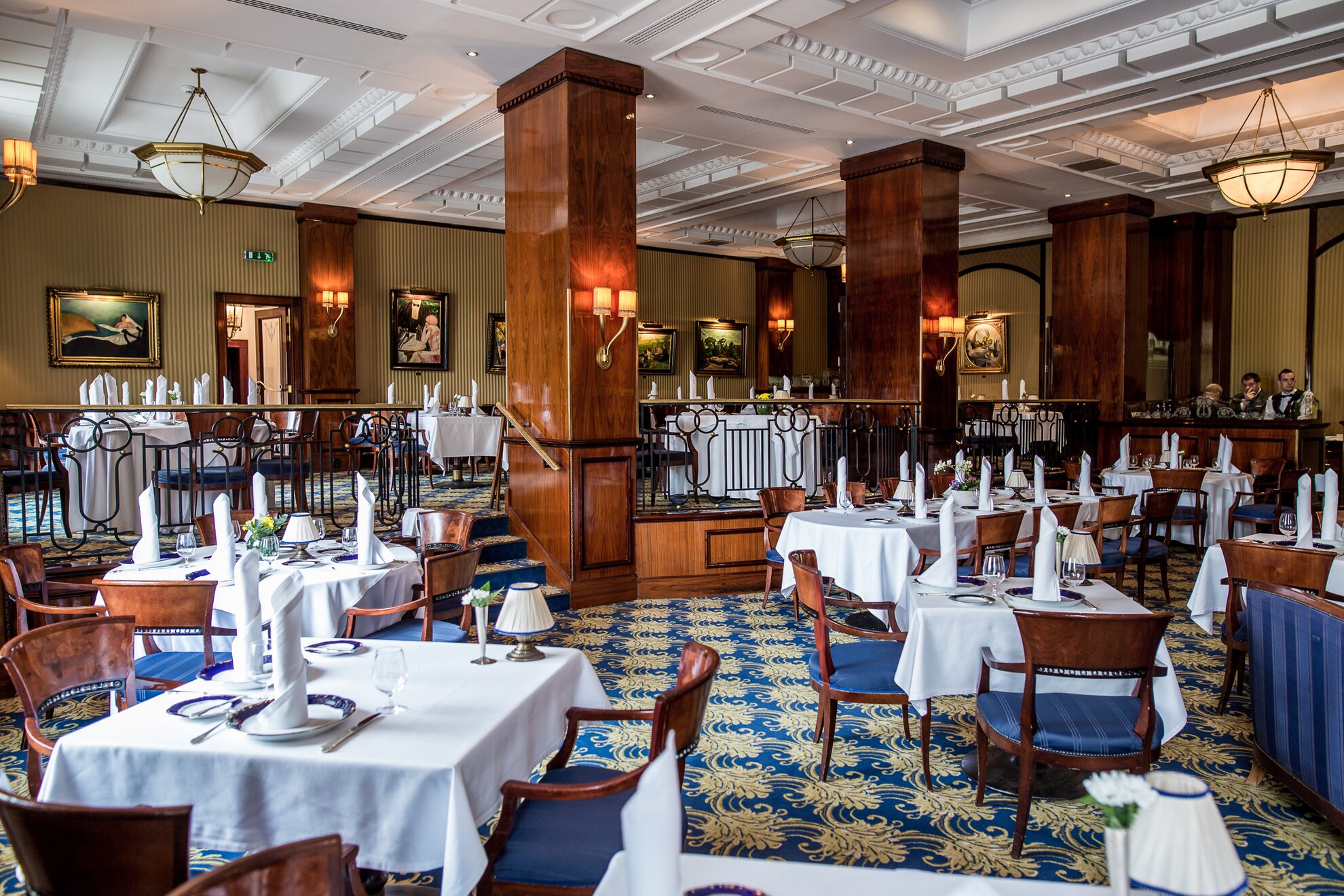
Merker explains further: “A lot of Hungarian emigrés paid a visit to the homeland. Many families had an American uncle who brought in dollars, jeans and spent money, making Hungary a curiosity among the Soviet states. Pretty soon, film crews started arriving in Budapest. The Danube InterContinental was also famous for having a lot of Western stars stay there, and holding Elizabeth Taylor’s 40th birthday party, where Michael Caine, Grace Kelly and, course, Richard Burton, raised glasses. Here, you could party relatively freely".

Further down waterside Belgrád rakpart, the walk stops at the spot where protest figure and writer István Eörsi lived, his apartment integral to the American-initiated Helsinki movement in Hungary, a gathering place for the opposition intelligentsia and one of the locations of the Alternative Cultural Forum.
The tour guide also goes into deeper specifics of life under long-term dictator János Kádár, the so-called 3Ts period (Tiltott, Tűrt, Támogatott – Banned, Tolerated, Supported). Back then, even little drops of Western culture raised Hungarian morale, and a wave of resistance was buoyed by music.

There were literary connections, too, of course, but the last stop is probably a telling one: the first McDonald’s on downtown Régiposta utca, unveiled in the spring of 1988, 18 months before the Berlin Wall fell. Its opening was another symbolic moment – and a confusing one. Locals dressed up in a jacket and tie to attend this special event, only to find that they just needed to saunter up to the counter and order a hamburger and fries.
The next free walk run by Hosszúlépés in the US-Hungary series will be at 11.30am and 2.30pm on 7 November, then on the next three Saturdays at 11am. Details in Hungarian here. For information on the various English-language tours they also run, see here.

Megjelent első bookazine-unk, ne maradj le róla!
Már 15 éve lélegzünk összhangban a fővárossal. Jubileumi kiadványunkban mindent megtalálsz, ami magazinunk és eddigi munkánk esszenciája. Gasztronómia, kultúra, városi legendák és Budapest arcai, interjúk, történetek és a legjobb helyek – úgy, ahogyan mi látjuk a fővárost.
Rendeld meg itt vagy keresd a nagyobb könyvesboltokban!
hirdetés


