

1/13
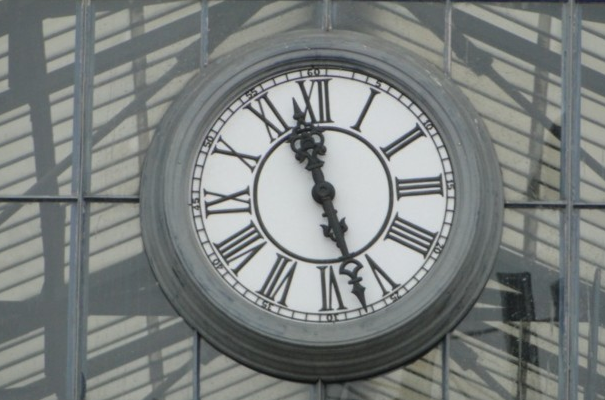
Nyugati Railway Station
The Nyugati Railway Station used to stand on the edge of town; the station of today opened in 1877, moved out of the way of the planned Great Boulevard. The clock, however, is much younger: it was installed during the reconstruction of the facade in 1998.
2/13
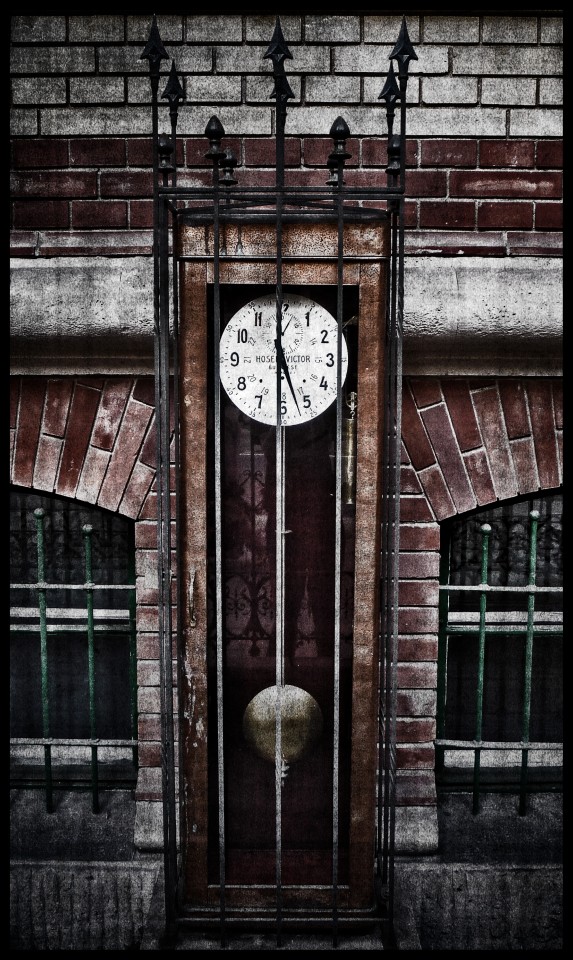
Eötvös Loránd University (ELTE)
This clock has been standing by the wall of the university building on 6-8 Múzeum Road since 1912. It has its maker's name displayed on the clock-face. Viktor Hoser Jr. (1871-1957) connected the extremely accurate clock of the Department of Astronomy with this one, making use of the accuracy of electronic control. When the building underwent reconstruction, the clockwork was also restored by the hands of Huba Vályi, the oldest clockmaker of the day. Today, it is more accurate than ever.

3/13
Óra Villa
This villa, built in 1843, was named after its clock. For some time the Hungarian commander, Artúr Görgey, was here, when in May 1849 he was preparing to re-conquer Buda.
Where to find it: 23/b Diana Street XII District

4/13
St. Stephen's Basilica
The St. Stephen's Basilica is one of those landmarks in Budapest that seems to look older than it is. It was only consecrated in 1905, in presence of Franz Joseph I.

5/13
Keleti Railway Station
This is how the clock of the Keleti Railway Station looked back in 1951, framed by a red star. The period is well characterised by the sign above the entry, which reads: 'eternal glory and gratitude to the buttress of our independence, the liberating Soviet Union,' which deliberately ignored the inconsistency between occupying forces and independence.

6/13
Evangelist Secondary School
Located in the courtyard of school grounds, one of the most beautiful sundials of Budapest is only accessible to the teachers and students of the Evangelist Secondary School. If you want to know everything about the sundials of Hungary, immerse yourself into Sándor Keszthelyi's meticulous study (in Hungarian).

7/13
The building of the Federation of Jewish Communities in Hungary
This clockwork is, unfortunately, missing. It seems that the prudent renovation of the building did not extend this far. Although the building stands somewhat back from the line of the other buildings, Dob Street still seems too narrow to get a proper look at its spectacular façade.
Where to find it: 35 Dob Street, VII District

8/13
Paris Department Store
This clock is also rarely noticed. It is part of the Paris Department Store's facade. After its transformation in 2009, the building has remained the architectural monument of three eras: the beautifully renovated ball room of the one-time Terézvárosi Casino dates from 1883; then a reinforced concrete (a structural material considered highly modern back then) department store was built around it in 1911; and all this is complemented by a 21st century entrance and additional level.

9/13
The former Embassy of Yugoslavia
This traditional style clock has been standing on the corner of Andrássy Avenue and Dózsa György Road since the 1920s. Hungarian politician Imre Nagy was given sanctuary in the corner building that stands behind this clock in 1956. It was then the Embassy of Yugoslavia but he was betrayed by then Yugoslavian Prime Minister Tito and was taken to Romania.

10/13
People's Stadium (now Puskás Stadium)
For football fans this photo needs no explanation, although you might be unfamiliar with Broadis, the English striker who scored the consolation goal for England. This match, in 1954, where Hungary beat England 7 to 1 was meant to be England's retaliatory game for an earlier match when Hungary beat England 6 - 3.

11/13
Gogol Street
While this is a less spectacular sundial - you might be surprised to know just how many sundials Budapest has. The building at 17 Gogol Street was built in 1959 and it could do with a touch up.

12/13
Nyugati Square
These two clocks in Nyugati Square hardly ever display the same time. The modern clock is more accurate, thanks to the sponsors. Half of the time, though, it displays advertisements. It's a shame that the district had no money for maintenance and had to sell it.

13/13
Time Wheel
This memorial that doubles as a clock Időkerék (Time Wheel) in the Ötvenhatosok tere (56ers Square)was dedicated on 1 January 2004 - the day Hungary was admitted to the European Union. The artificial sand trickles down in exactly a year. Or at least it was meant to - it no longer functions. According to the designer, János Herner, it was intended to symbolise time.
If you would like to know more abut Budapest, you can buy the author's book, Budapest Könyv ('Budapest Book'), which is in Hungarian here.

Megjelent első bookazine-unk, ne maradj le róla!
Már 15 éve lélegzünk összhangban a fővárossal. Jubileumi kiadványunkban mindent megtalálsz, ami magazinunk és eddigi munkánk esszenciája. Gasztronómia, kultúra, városi legendák és Budapest arcai, interjúk, történetek és a legjobb helyek – úgy, ahogyan mi látjuk a fővárost.
Rendeld meg itt vagy keresd a nagyobb könyvesboltokban!
hirdetés


